Skip to Content

Restorative Dentistry to Rebuild Strength, Function, and Appearance

Restorative dentistry patient

Timely Restorative Care Can Help Prevent More Extensive Treatment Later

Restoring damaged teeth does more than improve how your smile looks. Being able to chew comfortably and having a bite that fits together properly both affect your overall health, and addressing decay or breakage early can help you avoid more involved care down the road. At Family Dentistry of Yorktown, Dr. Ken Wachs, DDS, and Dr. Jennifer Wachs, members of the New York State Dental Association, aim to return each tooth as closely as possible to its natural strength, function, and appearance while preserving as much healthy structure as they can. Depending on your needs, treatment may include tooth-colored fillings, inlays and onlays, dental crowns, bridges, implant restorations, or dentures. Many restorations can be designed and milled in a single visit with our same-day CEREC technology, which is a real convenience for busy patients in Yorktown Heights and Bedford Hills.

Have a broken or decayed tooth? Call Dr. Ken Wachs at Family Dentistry of Yorktown at 914-245-9881 to discuss your restorative options.

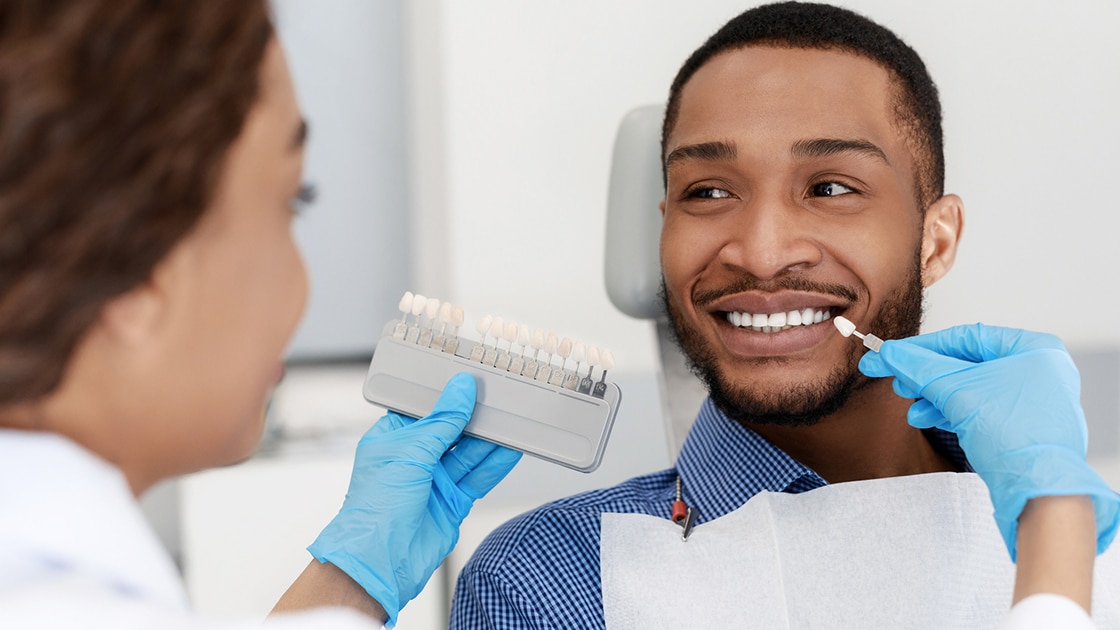
Patient Having Shade of Teeth Checked

Composite Fillings

Composite fillings use tooth-colored material to restore teeth with cavities and maintain a natural appearance. Once the decay is removed, the tooth is filled with a composite material which is then cured using a specialized light to harden the material. Composite fillings can be done in one visit.

Learn More About Composite Fillings
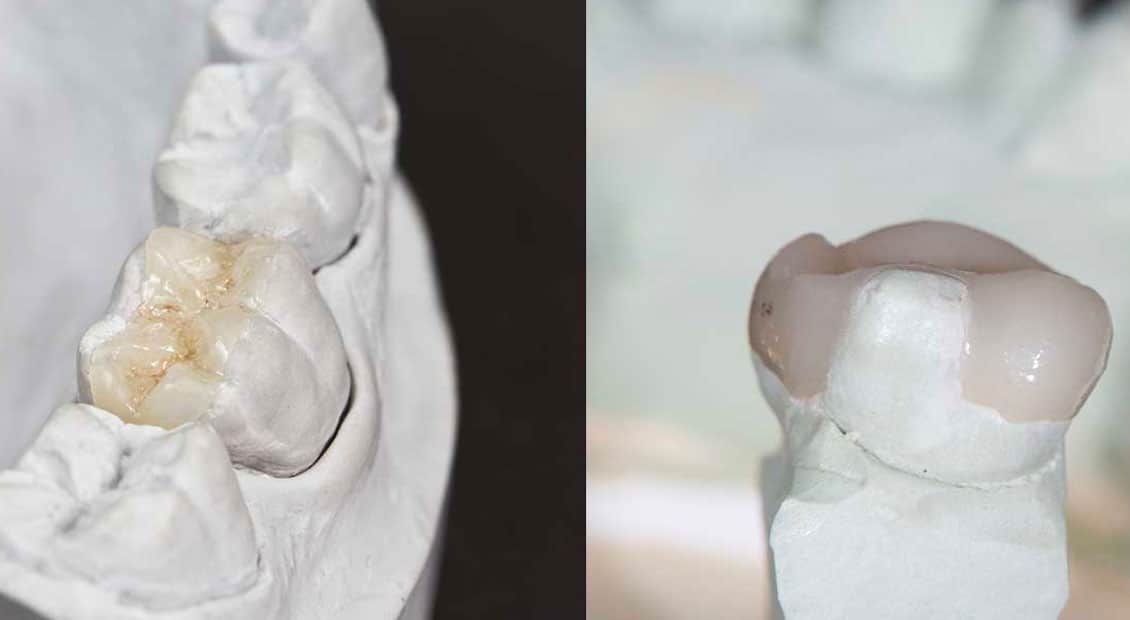
Inlay Onlay

Inlays & Onlays

An inlay or onlay is a partial crown restoration that can be placed when there is not sufficient tooth structure to support a filling but enough tooth structure left that a full crown is not needed. Inlays/onlays are made of porcelain or gold, and they aesthetically and functionally replace the missing tooth structure.

Learn More About Inlays & Onlays
Dental Crown

Dental Crowns

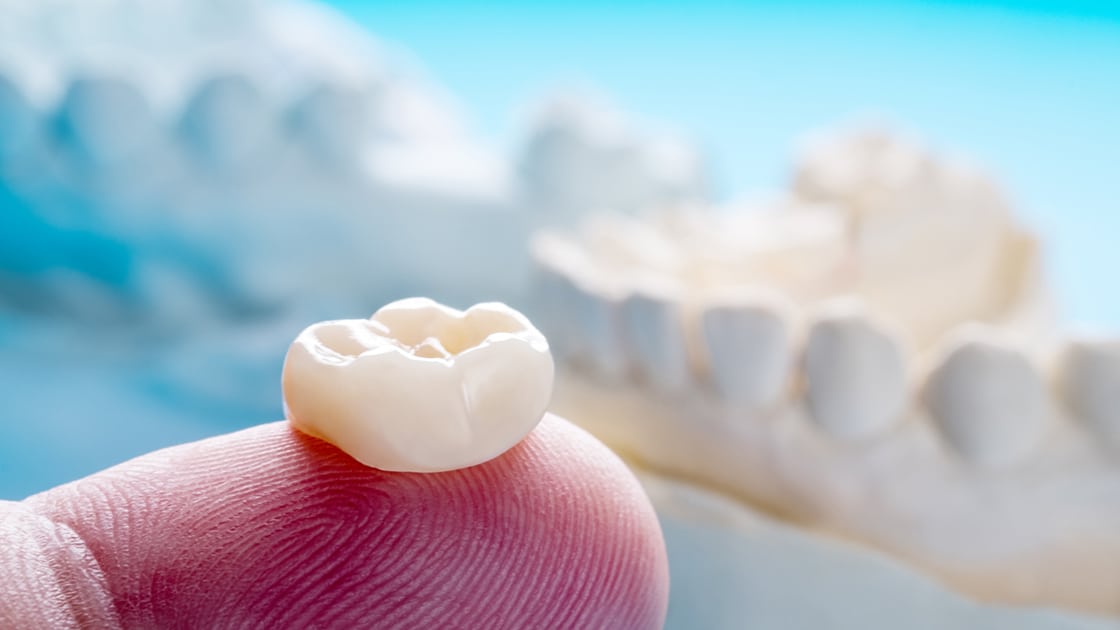
A crown is a dental restoration that completely covers the outside of a tooth that is cracked, broken, worn down, or severely decayed. Dental crowns are usually completed in two visits. During the first visit, the tooth is prepared (shaved down) and an impression is taken. A temporary crown is placed while the permanent crown is fabricated. During the second visit, the permanent crown is carefully fitted and then cemented into place.

Learn More About Dental Crowns
Dental Bridge

Dental Bridges

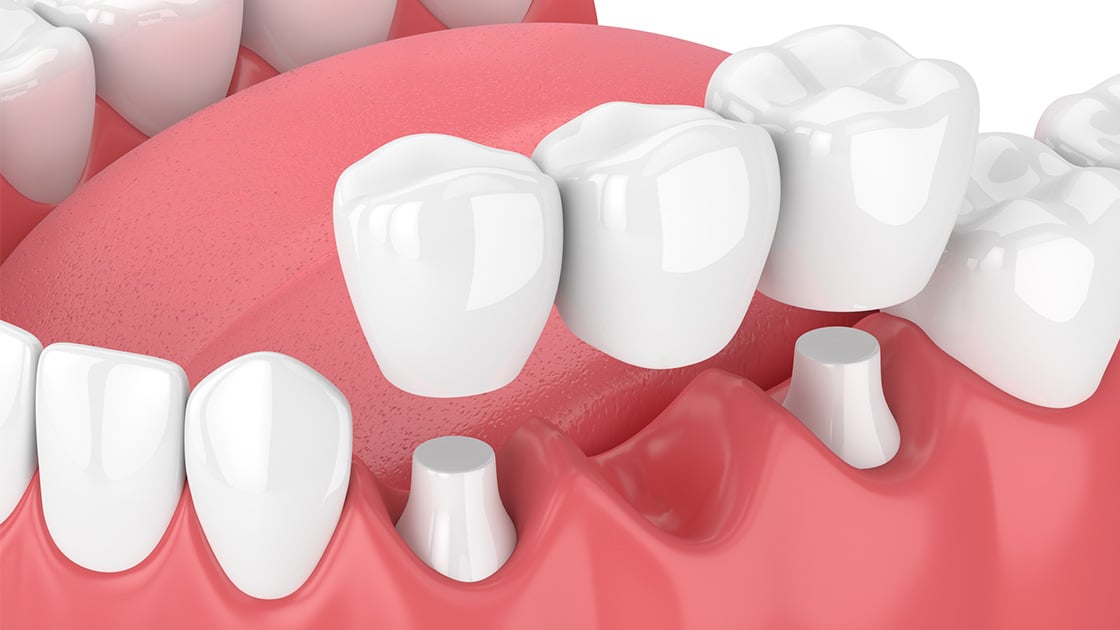
A bridge can replace missing teeth without the use of a denture or dental implant. A bridge is composed of two crowns and a replacement tooth or teeth. Crowns are typically placed on the teeth on either side of the space, with the fabricated tooth or teeth attached in between.

For multiple missing teeth, an implant may be used to anchor the bridge.

Learn More About Dental Bridges
Dental Implant Restoration

Dental Implant Restorations

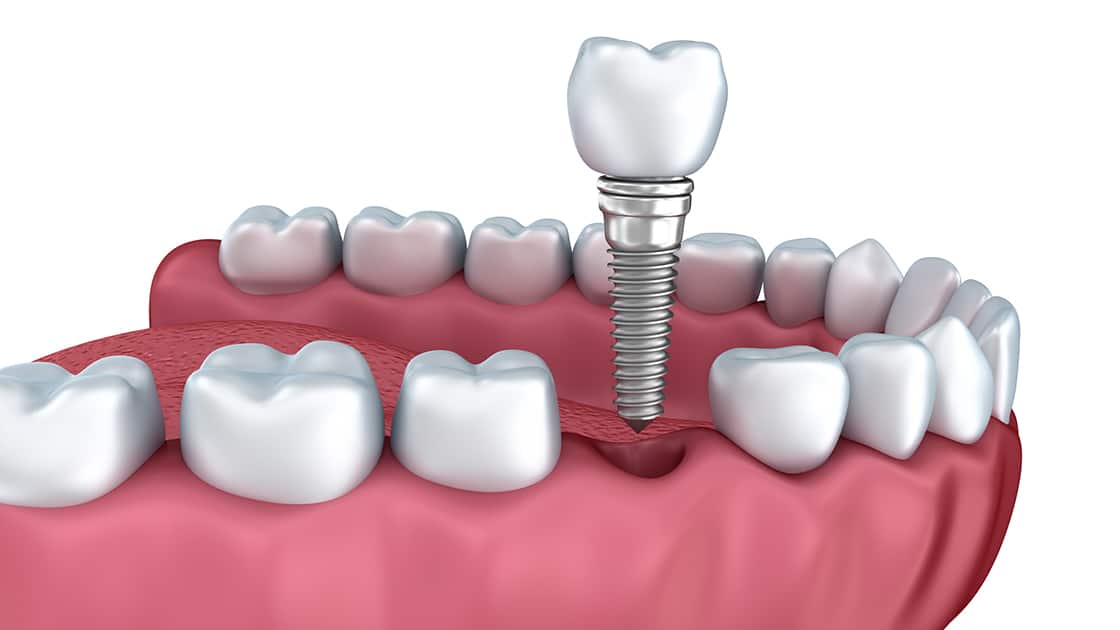
Dental implants replace missing teeth and protect existing teeth by helping to preserve bone structure. Dental implants are composed of three pieces: a small screw made of a biocompatible metal called titanium, an abutment that connects the screw, and the final restoration.

Learn More About Dental Implant Restorations
Woman Smiling Dentures

Dentures

A denture is a replacement for multiple missing teeth within the same (upper or lower) arch. A denture differs from a crown or bridge in that it does not rely on an existing tooth structure, and it completely replaces the missing teeth.

There are several different types of dentures:

  • Full or Partial
  • Removable or Fixed
  • Traditional or Implant-Supported
Learn More About Dentures
Root Canal Treatment

Root Canal Treatment

Root canals are most often necessary when decay has reached the nerve of the tooth or the tooth has become infected. When root canal therapy is performed, infected or inflamed pulp is removed from the tooth chamber. The inside of the tooth is then cleaned and disinfected before being filled and sealed to limit the possibility of future infection. Soon after the root canal is performed, the tooth is restored with a dental crown or filling to protect the tooth and restore normal tooth function.

Holding an Extracted Tooth

Extractions

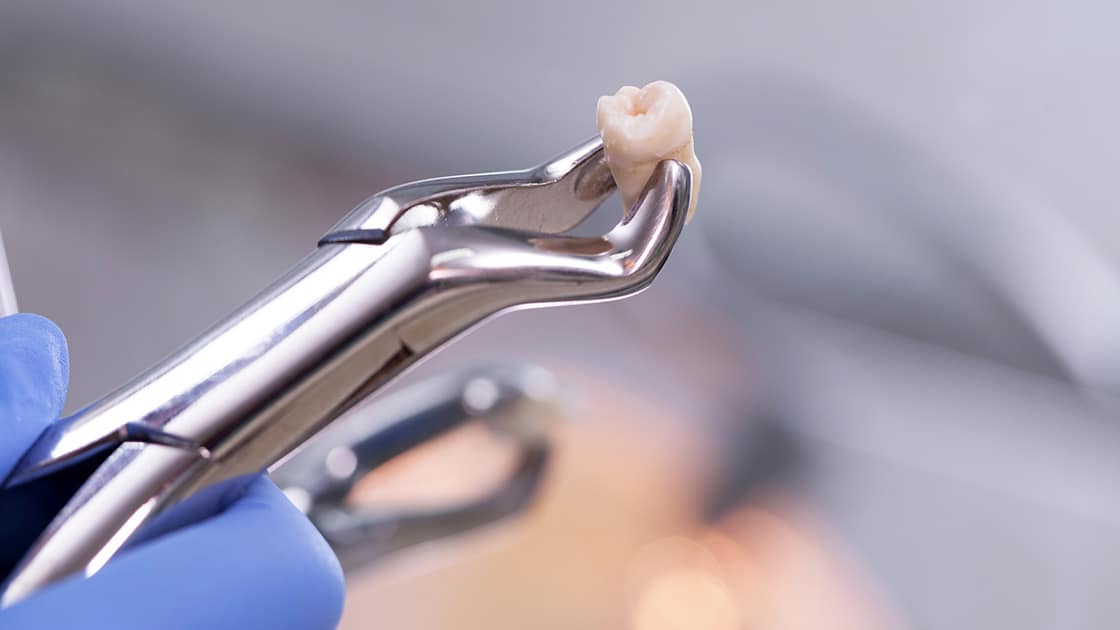
A tooth that can not be saved with restorative procedures may need to be removed. Before removal of the tooth, the area will be numbed with anesthesia. The tooth is loosened from the jawbone and surrounding ligaments and tissues with a gentle rocking motion. Once it is loose, it is gently removed. Stitches may be necessary after the removal of a tooth.

Learn More About Extractions
Looking for a practice in the
Westchester County
area
? Call 914-245-9881 to schedule your appointment today!

Why choose us?

Lorem ipsum dolor sit amet, consectetur adipiscing elit, sed do eiusmod tempor incididunt ut labore et dolore magna aliqua. Ut enim ad minim veniam, quis nostrud exercitation ullamco laboris nisi ut aliquip ex ea commodo consequat.

Contact our office today to request your appointment!

Family Dentistry of Yorktown

ADDRESS

334 Underhill Ave., #1D
Yorktown Heights, 
NY 
10598

PHONE

Fax: 

914-245-9883
Appointment Request
Opt-in to electronic communication
By submitting this form, you agree to receive email, text, and phone communications from our office. SMS Messages from the office will include: appointment reminders and follow-ups regarding due dates and scheduled appointments. Messaging frequency may vary. Our Privacy Policy and Terms & Conditions can be viewed by clicking here. Users will have the option to opt out of receiving texts by replying STOP. For assistance you may reply HELP. Standard data rates may apply.

Please note that e-mail is not a secure form of communication. Medical information placed here may not be confidential. This form should not be used by children under the age of 18. If you prefer to speak to us directly, you are also welcome to call us so that we may assist you.
Sending

location
Family Dentistry of Yorktown
334 Underhill Ave., #1D
Yorktown Heights,
NY
10598
914-245-9881
HOURS
Monday
8am - 5pm
Tuesday
7:30am - 5pm
Wednesday
7:30am - 5pm
Thursday
7:30am - 5pm
Friday
8am - 1pm
Saturday
7am - 12pm
Sunday
Closed
SOCIAL
Accessibility